
Findings Support YPI’s Goals To:
- Establish stronger trust between youth, police and the greater community.
- Break down the negative stereotypes often affecting the relationships between youth and police.
- Humanize the challenges each faces.
YPI has the overall effect of improving community relations between citizens and law enforcement because it humanizes the challenges faced by both sides. Youth working with officers through YPI will develop new knowledge, attitudes and beliefs to help them avoid violence and conflict.
A Data-Driven Approach
As part of our model, all youth and officer participants complete a survey before beginning the program and another survey at the end of the week. These anonymous surveys allow honest responses on how each participant perceives the other group.
- Data collected from the surveys shows changes in perception and attitudes from the start of the program week to the end.
- This data is analyzed by a certified third-party research institute which produces reports throughout the contract period.
- Our research institute shares a final outcome summary with all parties involved at the end of the contract.
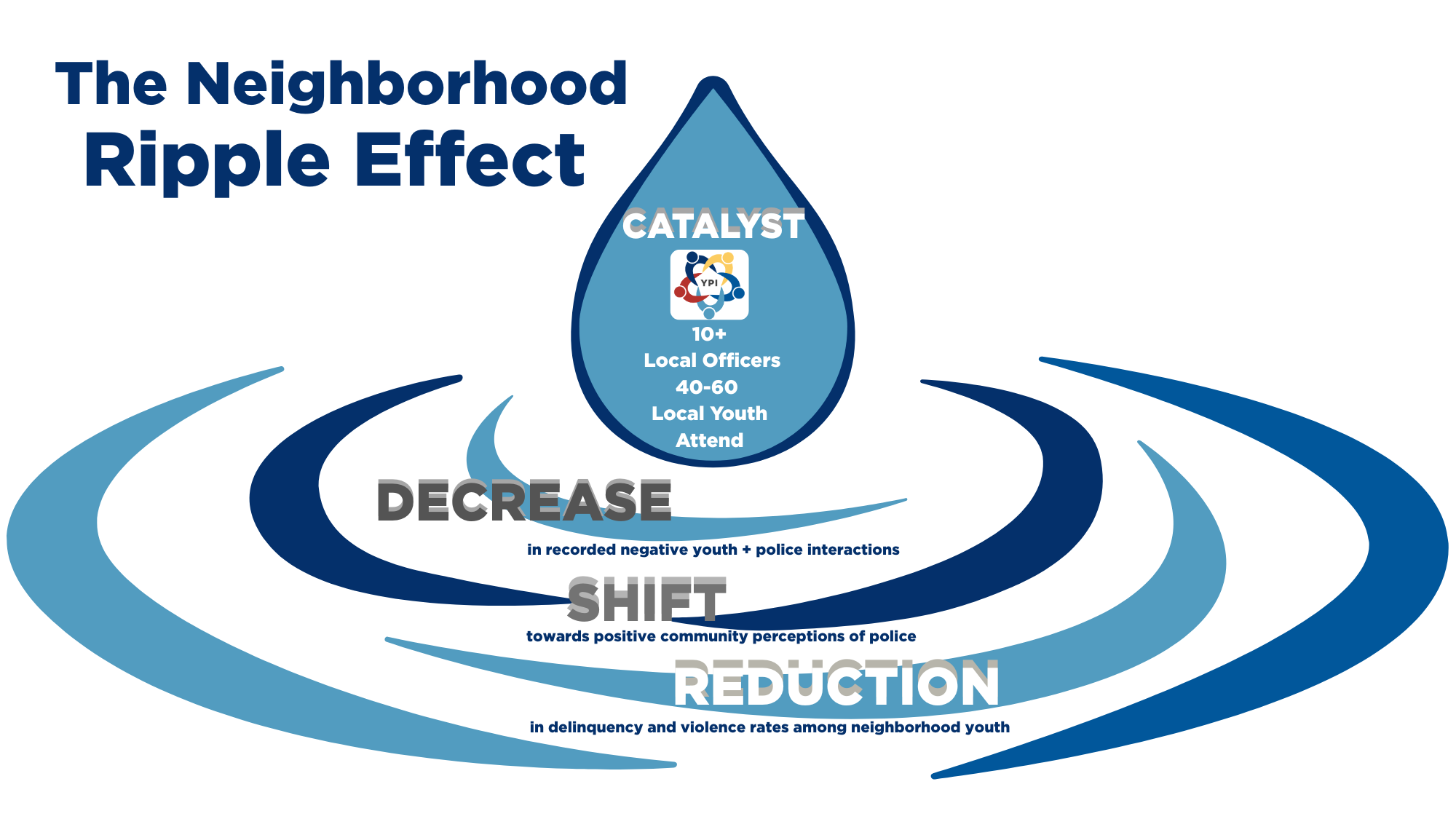
The Neighborhood Ripple Effect
Research has shown that a ripple effect takes place when a certain number of youth and officers from one community engage in YPI.
Program Accomplishments
The US Department of Homeland Security named YPI a Promising Program, 2019
Cops and Urban Youth Find Common Ground, interview with Jay Paris published in The Wall Street Journal, June 3-4, 2017
Overcoming Stereotypes Between Officers and Teens, by Jay Paris and Dr. Nina Rose Fischer, published in Police Chief Magazine, January 2024
Dr. Nina Rose Fischer, John Jay College of Criminal Justice, lead several longitudinal studies published in her book, “The Case for Youth Police Initiative: Interdependent Fates and the Power of Peace”
YPI closely aligns with recommendations made in The Final Report of the President’s Task Force on 21st Century Policing, published by the Obama Administration, May 2015
Evolved from OJJDP-approved, evidence-based Gang Resistance Education and Training (G.R.E.A.T.), a school-based program that seeks to prevent violence and criminal activity while opening up ways to develop positive relationships with authority figures